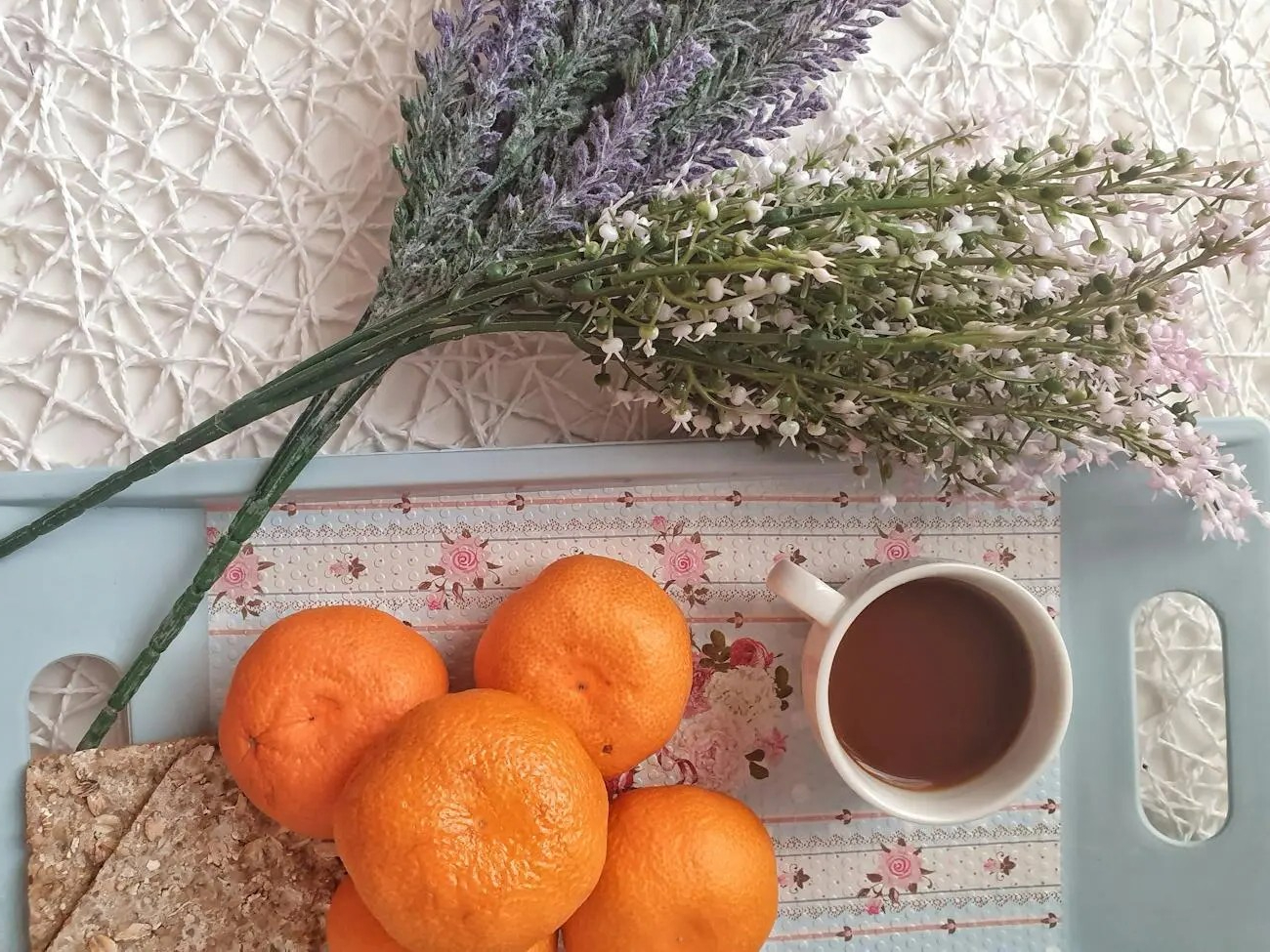
Sitting cross-legged, basking in the dappled sun, sunlight falling on, off leaves, spilling, splashing, us peeping out the balcony bars, teeth sunk into the tangy pulp of oranges, spitting out the small pips, smelling citrus and reading the book in front. Orange, the colour and the fruit.
Scents and images often stir sensibilities and evoke strong associations from our distant past.
One such sensory experience draws from my recently acquired habit and the daily commute through the street-side fruit markets. I have had this ritual for almost a year now, to carry a box of cut fruits to my office. There’s an apple, one pomegranate, an orange or a bunch of grapes if they’re in season, carefully laid out over a piece of tissue and placed in my tiffin box. It started out with me becoming conscious of my health. But now I have come to love the sweet, biting, citrus taste of fresh fruits in my mouth. These days I notice fruit sellers with their mini-trucks or carts, for some reason painted mostly blue, parked on the sidewalks, with thin wheels and long spokes, fully loaded with oranges, a big heap, a carefully contained avalanche of green balls yellowing in patches. On the fruit carts, some with parasols and some under awnings to keep off the sun, I can also see green custard apples, pink dragon-fruits, pretty looking and almost cosmetic, melons, pineapples, papaya, chikoo (sapota), apples, pink and red, premium and regular, bananas, unripe and green and yellow ripening ones, strung in bunches from the ceiling. Fruits of all kinds are neatly placed in coloured plastic crates or small pyramids. Propped between the fruits or clasped to the side of the cart, there are old weighing scales or digital machines and slates scribbled with chalk announcing their per Kg price. This display reminds me of my childhood trips to the Sunday Market with Papa, where I would gleefully roam around with a spinning pin-wheel in my hand while he bargained the prices.
In my recent visit to Spain, I came across Valencia Oranges which were rather ubiquitous in every city including Valencia. Though this variety is readily available here in India, having it in the place where it draws its name from brings a kind of smug satisfaction. Despite this one-off casual fling I am quite loyal to and love our homegrown Nagpur oranges.
A Peel of History
Oranges, like all citrus fruits have their origins in Southeast Himalayan foothills. The earlier variety of Oranges were sour & bitter and popular mainly for their fragrance and medicinal use. Sweet oranges were most likely brought from India to Europe by the Portuguese traders in the early 16th century.
‘Orange’, the word derives from the Sanskrit word ‘naranga’, or probably from Dravidian ‘naru’, meaning fragrant. It migrated into Persian and Arabic and later was adopted into several European languages, ‘naranja’ in Spanish, ‘narange’ in French and ‘narancia’ in Italian, where eventually ‘n’ was dropped to become today’s orange.
October
When we were children, my sister and I, through our growing up years had certain rituals that stayed the same, day after day, year after year. Come October and the season of festivities and holidays would begin. Every morning after breakfast, when Papa would leave for work on his scooter or our red Maruti Suzuki 800, and the sun would begin to climb the sky, we would carry a jute mat outside to the balcony, lay it out, cover the balcony rails with bedsheets, get our school books and splay down. There would be a slight chill in the crisp autumn air and the sun would feel good on the skin. We would sit there soaking sun for hours. Mummi would come from time to time, bearing food (home-made delicacies and fruits). Keeping us engaged were wasps and bumble-bees and dragon-flies and droning with them, our daydreams. Around noon, there would be bells and incomprehensible shouts, we would part the sheets to get a view of the streets and would see a person arrive, pushing his fruit-laden juice cart. Out of nowhere, aunties and children would stumble upon the road. Only sometimes would Mummi accede to our request and let us have Orange or Mosambi juice. We would watch in wonder as the juice-seller would pick out a small knife and put quick smooth slashes upon the fruit, peel off the orange green cover, throw the chunks into the mechanical chute and slowly spin the handle. Out gurgling through the sieve, would come a clear orange or pale mosambi juice that mixed with pepper and black salt, he would serve in long transparent glasses. Some days we would be out playing cricket in the neighbouring park. In the sun for hours, dehydrated, out of breath, full of sweat and grime, my friends and me would lay siege upon the juice cart. Cool juice on our lips, sour-sweet explosion in our mouths and we would devour winter in quick greedy gulps.
Some days when we would be out reading, Mummi would come from behind and squeeze orange peel in our eyes or I would do the same to my sister. There would be burning eyes, loud cries and laughter. In our house Mummi would often be the last to take a bath. As part of her daily prayer, she would offer water to the Tulsi plant, leave the incense sticks in the pot and then lay out the washed and dripping clothes on the clothesline. She would then stand by the balcony and have her breakfast which was mostly chivda (flattened rice) and vegetables. I would feel the cool scented drops from the washed clothes fall upon my face and would cup my palms to collect them. Mummi would stand there and pass live commentary on the neighborhood, on who was doing what, what they had spoken the day before, if she had spotted any of our friends or teachers, her opinion of the world in general and her disapproval of the gossips in particular, utterances and news of the extended family. She would marvel at the ground-floor houses, with well-maintained gardens, lush green lawns with brickwork on their borders, trimmed hedges, adorned with flowers of different kinds, roses, dahlia, marigold, jasmine, lively with bees and butterflies and sprightly squirrels. She would lament on us not having a garden and all that came with it. The three of us dreamt of playing badminton together, under an open sky with the cushion of grass under our feet, shuttle drifting through the wind, us squinting our eyes in the sun to take a swing. It was not going to be an ideal game, but it was never about a perfect game. It was about us playing together. In the years to come we did have a ground-floor house and then a bungalow, we went on to play a lot of badminton with our friends in the executive club, sister even picked it up as a sport in her college, but somehow, we never played with Mummi.
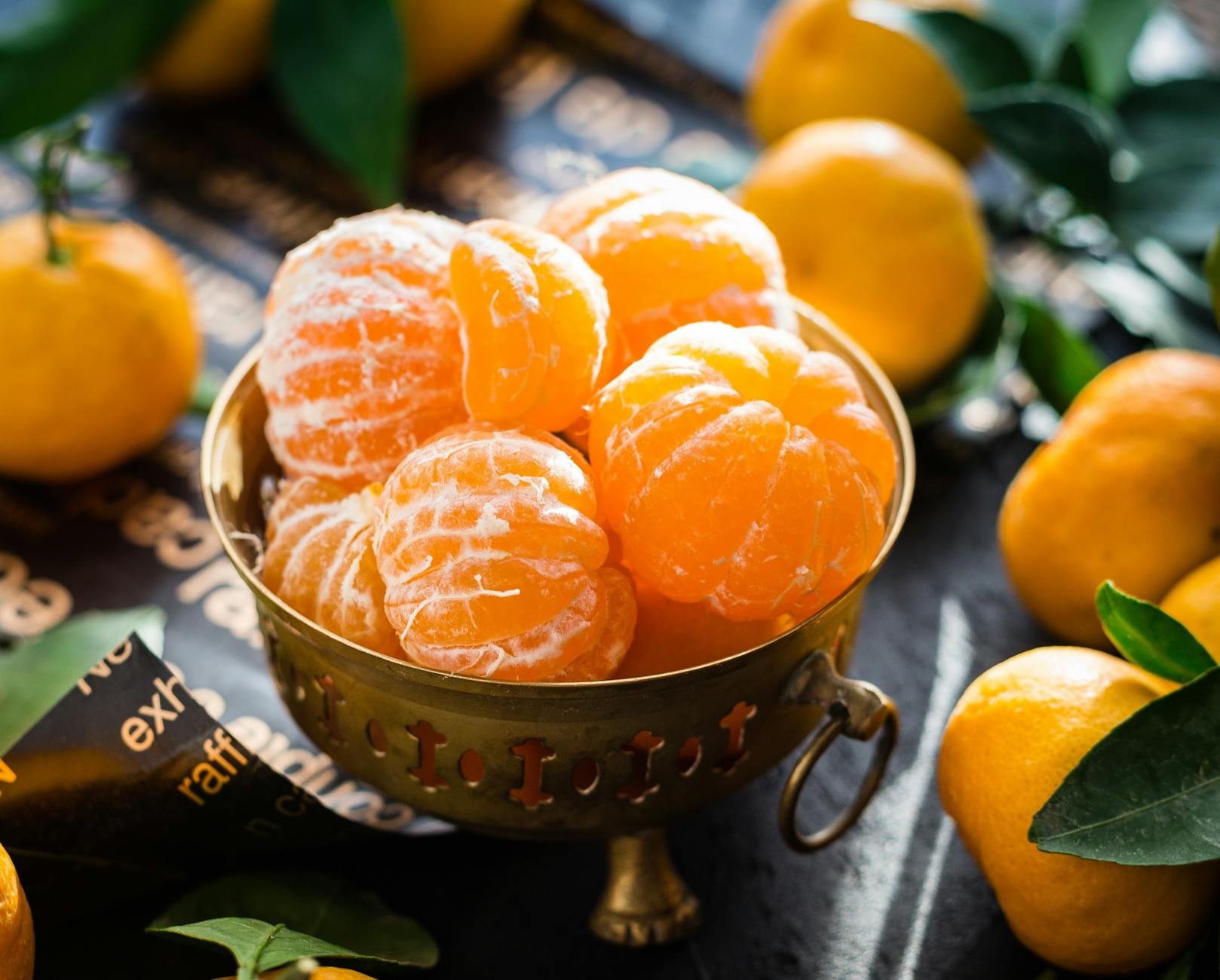
The smell of oranges carries me back several years to those days in the small balcony where these memories linger around like the citrus scent on fingernails. Every year when they’re in season I buy oranges in bulk. Every season, to me, they taste the same, of childhood winters. Every season they taste a bit older.

In Myth and Popular Imagination
Myth subsumes oranges like almost everything else and presents to us a delectable tale. Adonis, the lover of Venus is killed by a wild boar and is laid down in the shade of laurel trees. Venus remembers Daphne, Apollo’s first love, who was turned into a laurel tree and immortalised. She similarly transforms the dead Adonis into an Orange tree and plants this tree in the Garden of the Hesperides. This is how Oranges became sacred to Venus, the goddess of love. Oranges began to be identified as the equivalent of golden apples grown in this mythical garden of Hesperides and stealing these Golden Apples was the goal of Hercules, to secure the gift of immortality.
Oranges were considered exotic and these tales above show the importance accorded to this fruit of nobility.
Below is a beautiful poem by Roisin Kelly, titled ‘Oranges‘, in which she compares choosing oranges to the process of getting to know a person.
A drift of white blossoms
Oranges, by ROISIN KELLY
from the orange tree
will settle in my hair
and I’ll know.
This is how I will choose
you: by feeling you
smelling you, by slipping
you into my coat.
Maybe then I’ll climb
the hill, look down
on the town we live in
with sunlight on my face
and a miniature sun
burning a hole in my pocket.
P.S. The blogpost title, ‘The still life of oranges’ is a rich painting of the fruits in a wicker basket, done by Van Gogh in 1888.
 Somesh | Katyayan